
Some meals don’t seem to agree?
Check ingredients, portion sizes and recent food changes. Keep a simple, consistent routine and seek advice for recurring digestive problems.
Grain-free isn’t automatically the right choice for every sensitive dog.
Simple choices. A consistent routine.
No single food suits every dog. Clearly identified ingredients and a steady feeding routine can help you understand what agrees with yours.
Where to start ↓Explore feeding options →
Check ingredients, portion sizes and recent food changes. Keep a simple, consistent routine and seek advice for recurring digestive problems.
Grain-free isn’t automatically the right choice for every sensitive dog.
Vomiting or diarrhoea can have many causes. Speak to your vet if symptoms persist, are severe or your dog seems unwell.
See when to contact your vet ↓Look for a clearly identified protein and a carbohydrate your dog digests comfortably, such as rice or sweet potato.
Fibre and prebiotics are also part of the picture. Choose complete food appropriate for your dog.
Once you find a suitable diet, consistency helps. Introduce new food gradually rather than switching in one meal.
Complete wet food, Cold Pressed or a complementary mixer: choose according to your dog’s needs and usual routine.
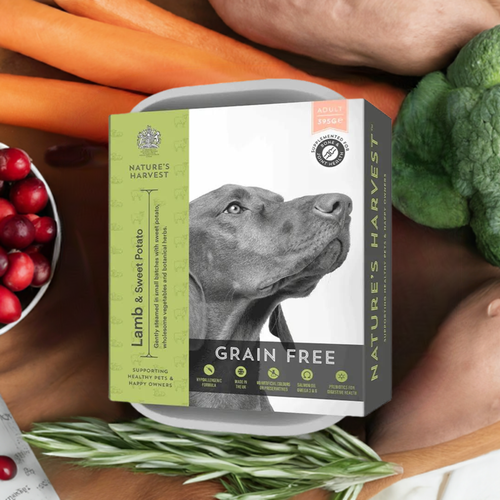
Lamb & Sweet Potato for adult dogs, with FOS and MOS prebiotics. One option for owners who prefer to feed without grains.
Explore lamb wet food →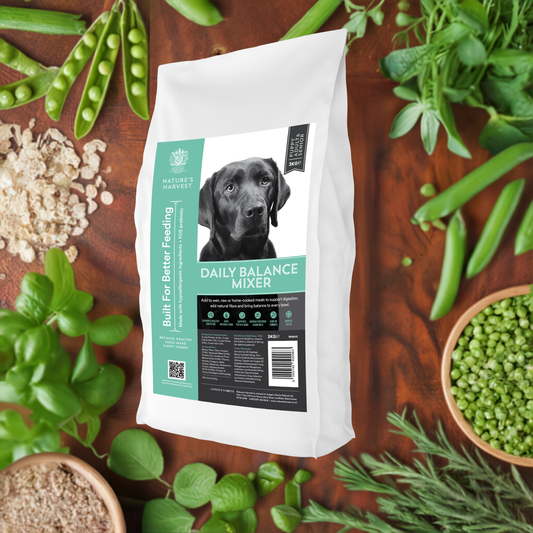
Daily Balance Mixer contains FOS. Feed alongside a suitable diet; it does not replace complete food on a like-for-like basis.
Explore Daily Balance →Choose a topic, then open just the answer you need.
Look at the overall recipe, how quickly any recent food changes were made and whether your dog is being fed consistently.
It can be worth considering fibre, prebiotics, portion size and whether your dog is eating too quickly.
Clearly identified ingredients and protein sources can make it easier to understand exactly what you are feeding.
This can sometimes warrant further investigation. Speak to your vet rather than assuming a particular ingredient is responsible.
A sudden digestive upset isn't necessarily a food sensitivity. If your dog seems unwell, symptoms are severe or they persist, speak to your vet.
Loose stools, wind, a noisy tummy or food that simply doesn’t seem to agree with your dog can make feeding frustrating.
Dogs with sensitive stomachs may benefit from a consistent diet made with clearly identified ingredients, an appropriate protein source and carbohydrates they digest well. There is no single food that suits every sensitive dog, so the aim is to understand what agrees with your individual dog rather than automatically choosing grain-free or avoiding particular ingredients.
At Nature’s Harvest, we make a range of complete wet and cold pressed foods, alongside our Daily Balance Mixer, giving you different ways to build a diet that suits your dog.
There is no universal sensitive-stomach recipe, but understanding a few key parts of the food can make choosing much easier.
Knowing whether the main animal protein is chicken, lamb, salmon, turkey or another source makes it much easier to understand what your dog is eating.
A sensitive stomach doesn't automatically mean your dog needs to avoid grains. Some dogs do very well with recipes containing brown rice. Others may suit a grain-free recipe using sweet potato instead.
Prebiotics provide a food source for beneficial bacteria naturally present in the gut. Some Nature’s Harvest recipes contain prebiotics including FOS and MOS as part of their formulation.
Fibre supports normal digestive function. Different ingredients provide different types of fibre, so it’s worth looking beyond the headline meat percentage when comparing foods.
For sensitive dogs, once you find a food that suits them, keeping flavours, proteins and feeding routines simple and consistent can help you understand what agrees with them.
If you'd prefer to feed without cereals, our Grain Free Wet Food range combines clearly identified animal proteins with sweet potato and vegetables.
Made with 60% lamb, alongside sweet potato, vegetables and carefully selected ingredients.
The recipe also contains the prebiotics FOS and MOS.
Why consider it?
• 60% lamb
• Clearly identified animal protein
• Grain-free recipe
• Sweet potato
• Contains FOS and MOS
• Complete wet food for adult dogs
If grains suit your dog, choose a complete recipe that fits their usual routine.
A sensitive stomach does not automatically mean grain free.
Our traditional wholegrain wet foods use brown rice alongside meat or fish, vegetables and other carefully selected ingredients.
If your dog digests rice comfortably, there may be no reason to remove it simply because another dog benefits from a grain-free recipe.
Consider Cold Pressed
Our Cold Pressed recipes offer another way to feed a complete everyday diet.
Rather than conventional high-temperature extrusion, the ingredients are pressed together at a lower processing temperature to create dense, nutrient-rich pieces.
They can be fed dry or softened with warm water if your dog prefers a softer meal.
Daily Balance Mixer is a complementary food, rather than a complete food.
It contains ingredients including oats, peas, linseed and seaweed, together with the prebiotic FOS.
It can be combined with Nature’s Harvest wet food or incorporated into another suitable feeding routine.
Because it is complementary, it shouldn't simply replace a complete food on a like-for-like basis.
They're not the same thing.
“Sensitive stomach” is a broad description owners often use when a dog regularly experiences digestive upset. A genuine food allergy involves the immune system and can cause symptoms that extend beyond digestion.
Possible signs can include gastrointestinal symptoms alongside problems such as persistent itching or recurrent skin or ear issues. Trying different foods at random isn't a reliable way to diagnose a food allergy.
If you suspect your dog may have a genuine allergy, speak to your vet. They may recommend a carefully controlled food trial or elimination diet.
Even a good food can cause digestive upset if the change is made too quickly.
For most dogs, introduce a new diet gradually rather than changing everything in one meal.
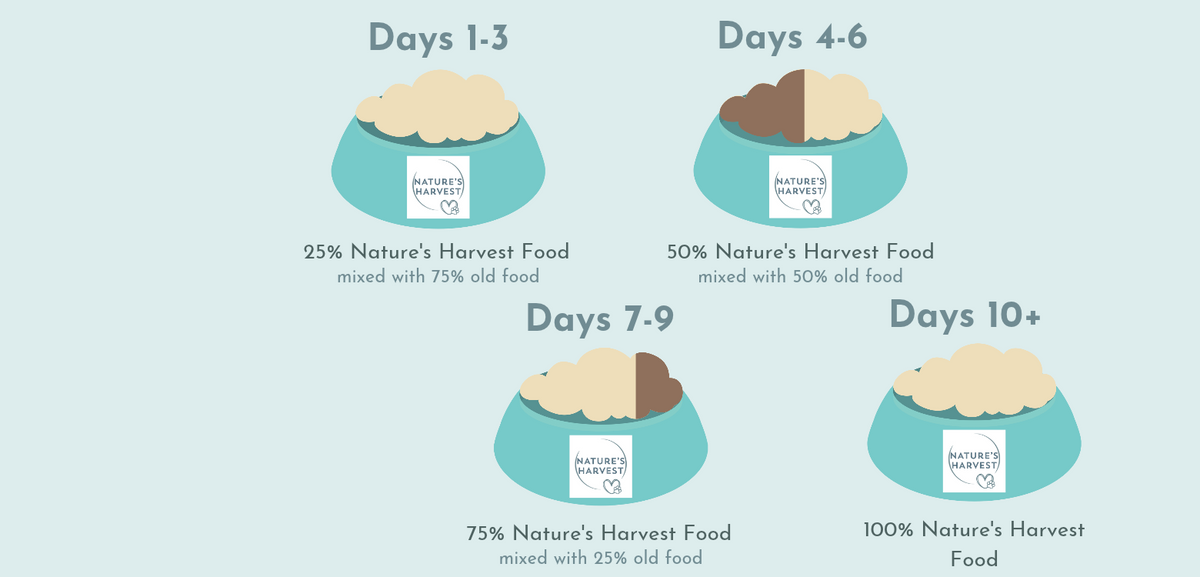
This is an example gradual transition. Follow the product’s instructions and your vet’s advice for your dog.
Not necessarily.
Many dogs tolerate grains such as rice perfectly well.
A grain-free recipe is simply another feeding option and may suit some dogs better than others.
Not necessarily.
Digestive upset can have many causes, including sudden dietary changes, scavenging, infections and underlying medical problems.
Changing food repeatedly can make it even harder to work out what agrees with your dog.
Once you find a nutritionally appropriate food your dog digests well, consistency can be useful.
Price alone doesn't tell you whether a particular recipe will suit your dog.
Look at the actual formulation, ingredients, nutritional suitability and how your individual dog responds.
Seek advice if digestive symptoms recur, persist or your dog seems unwell. Contact your vet promptly for:
Seek advice sooner for very young or elderly dogs, or dogs with an existing health condition. Digestive symptoms alongside itching or recurring skin or ear problems also need investigation.
Read PDSA’s advice on stomach upsets →