Look at the whole picture
Food can be involved in skin or digestive problems. Fleas, pollen, grass, dust mites and other environmental factors can also trigger itching.
Keep a record of meals, treats and changes in symptoms to share with your vet.
Clear ingredients. More informed choices.
Itching, tummy trouble or recurring flare-ups? Understanding what your dog reacts to comes before choosing a new food.
Where to start ↓Explore the range →
Food can be involved in skin or digestive problems. Fleas, pollen, grass, dust mites and other environmental factors can also trigger itching.
Keep a record of meals, treats and changes in symptoms to share with your vet.
Persistent scratching, irritated skin, paw chewing or recurring ear problems need investigation. Repeated food changes can make the picture harder to understand.
When to speak to your vet ↓Knowing whether a recipe contains chicken, lamb, salmon or another source helps you understand what goes into their bowl. Check the full ingredient list.
Look at proteins, carbohydrates, fats and added ingredients. Treats and extras matter too. Grain-free does not automatically mean allergy-free.
Choose a complete food suitable for your dog’s life stage for their main meals. Keep feeding consistent and follow your vet’s advice if an allergy is suspected.
Our everyday recipes offer clearly identified protein sources and a choice of wet and dry textures. Suitability depends on your dog’s specific trigger. These foods are not a substitute for a veterinary elimination diet.

Salmon & Sweet Potato: a complete grain-free wet food for adult dogs, with fish oil.
Explore salmon wet food →
A complete dry option with ocean fish, sweet potato and fish oil.
Explore Ocean Fish →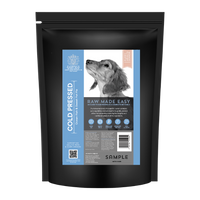
Discover the Ocean Fish & Sweet Potato texture with a 200g sample before choosing a full bag.
Try the Ocean Fish sample →Choose a topic, then open only the question you want answered.
Repeated scratching can have several causes, including food-related and environmental allergies. Ask your vet to investigate rather than assuming a change of food will solve it.
Redness or soreness deserves veterinary attention. Food is only one possible factor, and skin problems may need treatment as well as investigation.
Recurring ear problems can occur alongside allergic skin disease. Your vet can examine the ears and help identify the underlying cause.
Frequent licking or chewing can be a sign of irritation. Mention it to your vet, particularly if the paws are sore or the behaviour keeps returning.
Food allergies can involve skin and tummy symptoms. Keep a note of what you notice and discuss persistent or recurring problems with your vet.
“Hypoallergenic” should not be interpreted as meaning a food cannot cause an allergic reaction. Every dog is different; an ingredient tolerated by one dog may trigger another.
For a suspected or confirmed food allergy, what matters is identifying and avoiding the specific trigger. Your vet may recommend a controlled food trial using a specially selected diet.
No. Grain-free food avoids cereals, but a dog may react to an animal protein or another ingredient. The presence or absence of grain alone does not tell you whether a food suits your dog.
Read the full ingredient list, including animal proteins, carbohydrates, fats and added ingredients. Check treats and extras too. If your dog has a diagnosed allergy, ask your vet whether a particular recipe is suitable.
Our Grain Free recipes are complete wet foods made without cereals and with clearly identified animal protein sources. They are everyday foods, rather than veterinary allergy diets.
Cold Pressed Ocean Fish & Sweet Potato is a complete dry option with a clearly identified fish protein source. Check all ingredients against your dog’s needs before choosing it.
A sample can help you explore texture and preference before buying a full bag. It cannot diagnose or rule out an allergy. Do not introduce a sample during a veterinary food trial unless your vet recommends it.
No. Grain-free does not mean allergy-proof. Dogs can react to animal proteins and other ingredients as well as grains.
Not automatically. Chicken can be a trigger for an individual dog, but many dogs eat it without a problem. What matters is whether your dog reacts to it.
Not necessarily. Fleas and environmental factors can also cause itching. Some dogs have several triggers at once.
No. Repeated switching can make the real trigger harder to identify. A controlled veterinary food trial is more useful.
No everyday food can guarantee that an allergic dog will not react. The specific ingredient trigger matters.
If your vet suspects food allergy, they may recommend a structured food trial using a specific diet for a set period. Follow their instructions on the diet, duration and any later reintroduction of ingredients.
This is different from changing brands several times and seeing what happens.
Do not give anything outside the diet your vet has prescribed unless they approve it. Treats, table scraps, dental sticks, flavoured extras and other pet food can interfere with a controlled trial.
Nature’s Harvest everyday foods should not replace a veterinary elimination diet unless your vet specifically recommends them.
Speak to your vet if scratching, irritated skin, paw chewing, ear problems or digestive symptoms persist or keep returning. A food label alone cannot identify the cause.
Our Sensitive Stomach guide explains what to consider if digestive sensitivity is your main concern.
Read PDSA’s guidance on food allergies →