A coat that’s lost its shine?
Coats vary between breeds. If yours looks dull, the overall diet is one area worth considering.
A glossy coat alone cannot tell you everything about your dog’s health.
Everyday care, from the inside out
Protein, essential fats, vitamins and minerals all play a part. Start with a complete, balanced food that suits your dog.
Where to start ↓Explore the range →
Coats vary between breeds. If yours looks dull, the overall diet is one area worth considering.
A glossy coat alone cannot tell you everything about your dog’s health.
Persistent scratching, redness, bald patches or weeping skin need a vet’s attention. Changing food alone may not address the cause.
See the signs to check ↓Hair needs protein to grow and stay strong. Choose a clearly identified source your dog enjoys.
Omega-3 and omega-6 support normal skin and coat. The balance of the whole diet matters.
A complete food provides nutrients such as zinc and vitamin E as part of its formulation.
Fish-based recipes are one option. A healthy coat can also be supported by other complete, balanced foods. Explore our Grain Free Wet Dog Food for more wet feeding options.

Salmon & Sweet Potato: a complete grain-free wet food for adult dogs, with fish oil.
Explore salmon wet food →
A complete dry option with ocean fish, sweet potato and fish oil.
Explore Ocean Fish →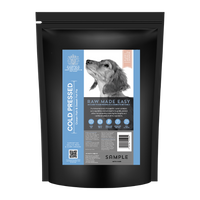
Discover the Ocean Fish & Sweet Potato texture with a 200g sample before choosing a full bag.
Try the Ocean Fish sample →Prefer wholegrains? Explore Salmon, White Fish & Brown Rice →
Choose a topic, then open only the question you want answered.
A healthy coat will vary enormously between breeds, but it should generally look and feel normal for your individual dog.
If their coat has noticeably lost condition, nutrition is one of several areas worth considering.
Occasional dry skin can have relatively simple causes, but persistent flaking or irritation deserves closer attention.
All dogs shed to some degree, and some breeds shed dramatically at particular times of year.
A sudden change in shedding, bald patches or thinning fur is different and should be investigated
Regular scratching, licking or chewing is not simply a cosmetic coat issue.
Allergies, parasites, infections and other skin conditions can all cause itching.
Redness, soreness, unpleasant odours or weeping skin need veterinary attention rather than simply a change of food.
Your dog's coat is one of the first things you notice — but good coat condition starts beneath the surface.
Protein, essential fatty acids, vitamins and minerals all play a role in maintaining normal skin and a healthy coat. So if your dog's fur has become dry, dull or lacklustre, it can be worth looking at what is going into their bowl.
At Nature’s Harvest, several of our recipes combine clearly identified animal proteins with naturally occurring or added oils and carefully selected nutrients that help support everyday skin and coat health.
Skin and coat health isn't about one “magic” ingredient.
It depends on the dog's overall diet being nutritionally appropriate and providing the building blocks the body needs.
Hair needs protein to grow and stay strong. Nature’s Harvest uses clearly identified sources including salmon, white fish, ocean fish, chicken and lamb.
Omega-3 fatty acids are an important part of the diet and contribute to normal body functions, including the maintenance of healthy skin. That’s why several Nature’s Harvest recipes include fish or salmon oil.
Omega-6 fatty acids also play an important role in maintaining normal skin and coat. The aim isn't simply to chase the highest possible number of one particular fat. Good nutrition is about the overall balance of the complete diet.
Zinc is an essential trace mineral with a role in normal skin function. You'll see zinc included within the nutritional additives of several Nature’s Harvest complete foods.
A nutritionally complete food provides vitamins alongside the other nutrients your dog needs. Vitamin E, for example, is included in a number of our recipes as part of the overall nutritional formulation.
Salmon oil is included in several Nature’s Harvest recipes.
It naturally provides omega fatty acids and is incorporated as one part of a nutritionally complete formulation.
Think of salmon oil as one useful ingredient within the whole diet, rather than something that can compensate for an otherwise unsuitable food.
Healthy skin and coat depend on the overall nutritional picture.
Made with 60% salmon, together with sweet potato, vegetables and selected herbs.
The recipe also includes fish oil, minerals and trace elements including zinc.
Why consider it?
• 60% salmon
• Clearly identified fish protein
• Contains fish oil
• Grain-free recipe
• Sweet potato
• Includes zinc within the nutritional formulation
• Complete wet food for adult dogs
For owners who prefer a dry food, our Cold Pressed Ocean Fish recipe provides another fish-based option.
It contains 49% dried ground ocean fish, sweet potato and fish oil.
Its declared nutritional analysis includes:
Omega-3: 0.97% · Omega-6: 2.85%
It also contains zinc, vitamin E and other vitamins and minerals as part of its complete nutritional formulation.
Why consider it?
• 49% ocean fish
• Contains fish oil
• Omega-3 and omega-6 declared on pack
• Grain-free recipe
• Sweet potato
• Complete cold pressed food
No.
A dog does not have to eat a fish-based food to maintain healthy skin and coat.
A complete, balanced diet should provide the essential nutrients your dog needs regardless of the main protein source.
Several of our other recipes also contain ingredients such as salmon oil alongside proteins including chicken and lamb.
Fish-based recipes are simply a particularly useful option for owners interested in incorporating fish and fish-derived oils into their dog's everyday diet.
Not necessarily.
Coat condition can provide useful clues, but it cannot tell you everything about your dog's health.
A dog can have an attractive coat and still have an unrelated medical problem.
Not automatically.
Before adding supplements, look at your dog's overall diet.
If they already eat a complete food, unnecessary supplementation may not provide additional benefit and can upset the nutritional balance.
Not necessarily.
Some dogs suit grain-free recipes and others thrive on foods containing grains such as brown rice.
The presence or absence of grain alone does not determine whether a diet supports normal skin and coat.
Not necessarily.
Itching can be caused by fleas, allergies, infections, parasites and a range of other conditions.
Persistent itching needs investigation rather than repeated food changes.
No.
Dogs need an appropriately balanced diet containing sufficient protein, fats, vitamins and minerals.
Fish is one useful source of nutrients, not the only route to healthy skin and coat.
Book an appointment if you notice something wrong with your dog’s skin. Signs that need attention include:
Skin problems can have many causes. Persistent itching needs investigation rather than repeated food changes. If you suspect a food-related reaction, read our Prone to Allergies guide. If your dog also has digestive sensitivity, our Sensitive Stomach guide explains what to consider.
Read PDSA’s guidance on skin problems →