Feel the ribs
You should generally feel them easily with light pressure.
Small changes. Healthier habits.
Measure meals, count treats and keep your dog moving. Here’s a simple place to start.
START WITH 3 SMALL CHANGESExplore feeding options →
Use your eyes and hands as well as the scales.
You should generally feel them easily with light pressure.
A visible waist should narrow behind the ribs.
The tummy should tuck upwards towards the back legs.
Hard-to-feel ribs or little waist? Ask your vet or vet nurse for a body condition check. See PDSA’s body condition guide →
Weigh dry food; accurately portion wet food. Start with the feeding guide and adjust to your dog’s needs.
Treats, chews and scraps all count. Set a daily allowance so everyone in the household follows the same plan.
Build suitable activity gradually. Check body condition and weight regularly to see how things are going.
That means daily calories, not food weight. Reduce calories from the main meal to allow for treats—or use part of their usual meal as rewards.
Choose a complete food your dog enjoys, then get the portion right.
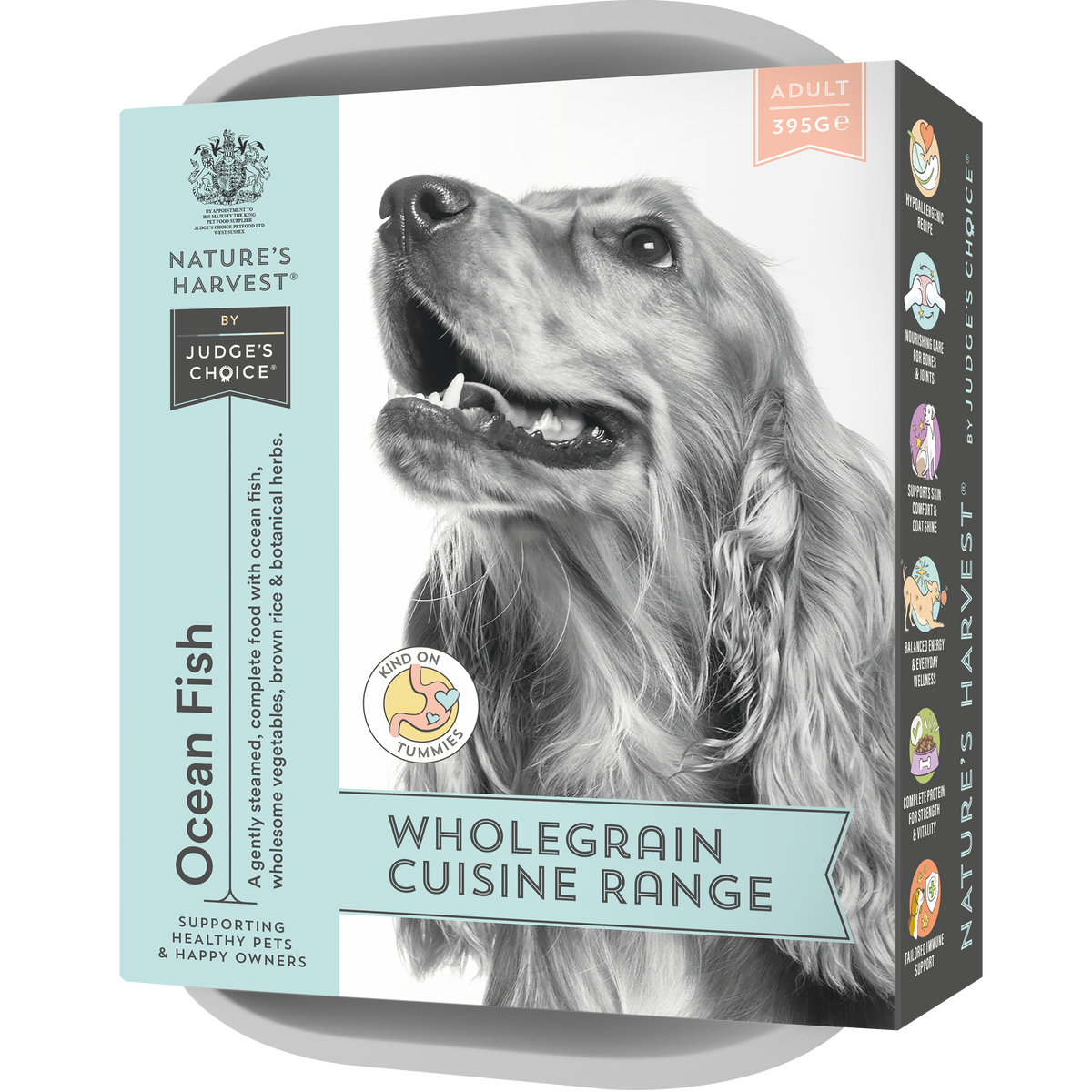
Complete adult wet food with brown rice. A lower-calorie-density wet option.
VIEW RECIPE

A concentrated complete dry food. Feed smaller, accurately weighed portions.
VIEW RECIPEEveryday feeding options—not veterinary weight-loss diets. For significant weight loss, your vet may recommend a specially formulated diet.
| Recipe | kcal |
|---|---|
| Salmon, White Fish & Brown Rice | 102 |
| Chicken & Brown Rice | 108 |
| Lamb & Brown Rice | 117 |
| Cold Pressed Chicken & Sweet Potato | 360 |
Dry food contains less water, so it provides more calories per 100g. Neither feeding format is automatically better for weight management: daily calories and portion accuracy matter.
Choose one topic, then open the question you need.
Weight alone doesn't tell the whole story. Dogs of the same breed can differ in size and build, so it is useful to look at body condition as well as the number on the scales. A dog in healthy condition should generally have:
You should be able to feel the ribs with light pressure, without them being prominently visible.
When you look down from above, there should usually be a narrowing behind the ribs.
From the side, the abdomen should rise towards the back legs rather than hanging straight down.
There shouldn't be a noticeable build-up of fat around the base of the tail, back or ribs. If you're unsure, ask your vet or vet nurse to show you how to Body Condition Score your dog.
A dog's target shouldn't simply be: “Lose 2kg.” The aim is a healthy body condition. Body Condition Scoring looks at:
This is particularly useful because ideal weight varies between dogs, even within the same breed. How to check your dog’s body condition →
For most dogs, weight gain happens because they are consuming more energy than they are using. But there can be several reasons why.
A little extra at each meal can become significant over weeks and months.
Treats, chews, training rewards and table scraps all contribute calories.
An older dog, a dog recovering from injury or simply a dog walking less than they used to may no longer need the same amount of food.
One of the easiest ways to accidentally overfeed a dog is for several family members to assume nobody else has given them anything.
Age, neutering, breed, activity and individual metabolism can all affect energy requirements.
Certain illnesses and medications can contribute to weight gain. If your dog's weight changes unexpectedly despite no obvious change in feeding or activity, speak to your vet.
Even an excellent-quality food can contribute to weight gain if too much is fed. Start with the feeding guideline for your chosen food, then adjust according to your dog's:
Feeding guides are a starting point, not an instruction to keep feeding the same amount regardless of what happens to your dog's weight.
For dry food, use kitchen scales rather than estimating by eye. For wet food, work out how much of the tray your dog actually needs each day. If you feed a mixture of foods, treats or chews, remember that they all contribute to the total daily intake. What matters is the whole day's food.
Two foods can look similar in the bowl but provide very different amounts of energy. That is why Nature’s Harvest declares calories per 100g on our product pages. That doesn't make one food “good” and another “bad”. It simply means the amount you feed needs to reflect how energy-dense the food is. A concentrated dry food will naturally be fed in a much smaller portion than a wet food. View feeding guidelines →
At 102 kcal per 100g, this is one of the lower-calorie adult wet recipes in the Nature’s Harvest range. It combines:
The lower calorie density can make it a useful option for owners who want to manage overall intake while still feeding a complete wet food. It is not a veterinary weight-loss diet, so portion size still matters.
VIEW SALMON & WHITE FISHOur Chicken & Brown Rice recipe provides 108 kcal per 100g and is another straightforward complete wet-food option. Why consider it?
Cold Pressed food is concentrated. For example, our Chicken & Sweet Potato Cold Pressed recipe provides 360 kcal per 100g, so dogs require much smaller portions than they would with wet food. That is not a problem in itself. It simply means weighing the daily portion accurately becomes particularly important. Our adult feeding guide gives suggested amounts according to body weight, but these should still be adjusted for your individual dog's condition, age and activity.
VIEW COLD PRESSED CHICKENNeither is automatically better. The important factors are:
How much energy does the dog consume across the whole day?
Are you actually feeding the amount you think you are?
Which feeding style helps your dog settle into a consistent routine?
Are they undoing the portion control happening at mealtimes? Some owners prefer wet food because the larger volume can make the bowl look more substantial for the calories provided. Others prefer the convenience and precise measurement of dry food. The best option is the one you can feed consistently and accurately.
This is where many weight-management plans quietly unravel. A few treats here and there can make a meaningful difference to your dog's daily calorie intake. A useful rule is to keep treats to no more than 10% of your dog's daily calorie allowance. If you give treats, reduce the amount of their main food accordingly.
If your dog eats dry food, you can set aside some of their daily portion and use it for:
That way, you're not continuously adding calories on top of the day's food.
Treats do not have to disappear completely. Just account for them. Instead of thinking: “That's only one treat.” Think: “How does this fit into today's total intake?” Particularly with smaller dogs, an apparently tiny snack can represent a much larger proportion of daily calories than it would for a person. And remember that:
Exercise is important for physical and mental health. Walks, play, training and enrichment all contribute to an active lifestyle. But trying to “exercise off” excessive food is rarely the most effective approach. Weight management works best when: Food intake + treats + activity are considered together. If your dog is currently very inactive, increase exercise gradually rather than suddenly asking them to do far more.
Food-motivated dogs can make portion control emotionally difficult. Try separating attention from food. Instead of responding to begging with another snack, try:
Not every reward needs to be edible.
If your dog is significantly overweight, it is worth involving your veterinary practice. A vet or veterinary nurse can help:
You should also speak to your vet if your dog:
Weight gain shouldn't always be assumed to be caused by overfeeding.
| Step | What to do |
|---|---|
| 1. Establish a baseline |
Record your dog's current:
|
| 2. Measure every meal | Stop estimating. Weigh dry food and accurately portion wet food. |
| 3. Account for treats | Keep a daily allowance rather than giving them freely. |
| 4. Keep feeding consistent | Avoid frequent changes that make it hard to judge whether the plan is working. |
| 5. Build appropriate activity | Exercise should reflect your dog's age, breed and health. If they are very overweight or have mobility problems, speak to your vet before increasing exercise significantly. |
| 6. Recheck regularly | Weight management works best when you monitor progress. Use both body condition and regular weigh-ins. |
Not necessarily. Some dogs are extremely food-motivated regardless of how much they have eaten. Begging is not a reliable measure of nutritional need.
It can. Any food can contribute to weight gain if the dog consistently consumes more energy than they use.
Not automatically. Dry foods are generally more calorie-dense because they contain much less water, which is why the feeding portion is much smaller. Compare calories and recommended feeding amounts rather than bowl volume alone.
They can. Especially for smaller dogs or dogs receiving treats from several people throughout the day.
Don't make drastic changes without advice. Dogs still need sufficient protein, vitamins, minerals and other nutrients. If your dog genuinely needs to lose a significant amount of weight, your vet can help you choose an appropriate diet and calorie target.
Before changing anything, record one normal week.
| Record | What to include |
|---|---|
| Meals | Exactly how much was fed. |
| Treats | Including training rewards. |
| Chews | Write down the size and frequency. |
| Human food | Even small amounts. |
| Who fed what | Particularly useful in busy households. |
| Activity | Walk duration, play and other exercise. |
You may find that the reason for weight gain becomes surprisingly obvious.
There isn't one everyday food that is automatically right for every overweight dog. Weight loss requires an appropriate total calorie intake while still providing adequate nutrition. For dogs needing significant weight loss, your vet may recommend a specially formulated weight-management diet.
Look at both weight and body condition. You should generally be able to feel the ribs easily, see a waist from above and see the abdomen tuck upwards when viewed from the side. If you're unsure, ask your vet or vet nurse to assess your dog.
Don't simply guess or dramatically cut the portion. Your dog's calorie requirements depend on their size, body condition, age, activity level and health. For genuine weight loss, speak to your veterinary practice about an appropriate target.
Not automatically. Wet food contains more water and is generally less calorie-dense per 100g than dry food, but portion size and total daily calories are what ultimately matter.
No. Dry food is simply more concentrated because it contains much less moisture. It needs to be fed in smaller quantities.
Not necessarily. Treats can still be part of the diet, but they should be accounted for within the dog's total daily intake. Aim to keep treats to a relatively small proportion of the diet.
It's worth checking portion sizes carefully and recording all treats, chews and extras. If the weight gain seems unexplained or continues despite controlled feeding, speak to your vet.
Neutering can alter a dog's energy requirements, but weight gain is not inevitable. Food portions may simply need adjusting as their needs change.
Weight loss should be gradual and controlled rather than rapid. Your vet or vet nurse can advise on an appropriate rate for your individual dog.
Exercise is important, but diet and calorie intake usually need to be managed at the same time. The most effective approach combines appropriate feeding with suitable activity.
Explore another health focus:
Getting older or slowing down? Ask your vet about changes in joint health and mobility.
Ask for support if your dog is significantly overweight, gains weight unexpectedly, struggles to lose weight, or develops changes in appetite, thirst, energy or mobility.
Check the feeding guide, or let us help you explore the range.
VIEW FEEDING GUIDEHELP ME CHOOSE